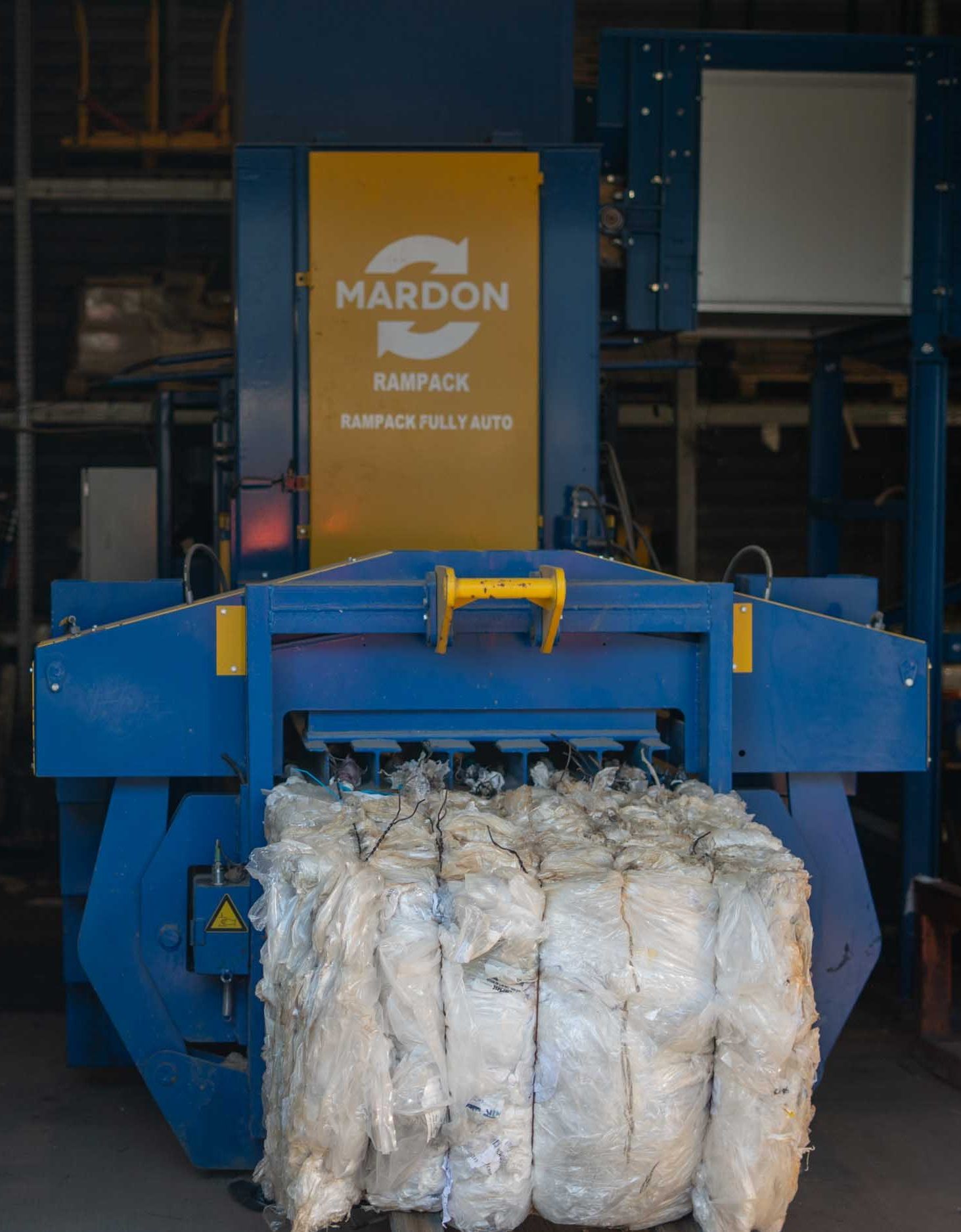
Often the first thoughts about what makes a good bale revolve around: the baler, the tonnage, the pressing force or the cycle time.
What’s often missed is the wire holding it all together – right up until a tie snaps on the yard and 500kg of cardboard spills across the floor.
Wire is the cheapest part of your baling operation, but the easiest to get wrong. Get the type, gauge, or finish mismatched to your machine and you’re looking at loose bales, rejected loads, and engineers on site fixing a problem that a correct consumables order would have prevented.
This guide breaks down wire options, which machines they’re built for, and where most sites lose bale quality without realising it.
The Two Main Wire Types (And Why They’re Not Interchangeable)
At Mardon, we supply the two core wire formats, and each is built for a different way of tying a bale.
Cut and loop wire comes pre-cut to length with a looped end, sold in 25kg bundles of roughly 100 wires. It’s threaded and tied manually (or with operator assistance) once a bale is ready, which is why it’s recommended for our RamPack Mill-size vertical balers and Semi-automatic horizontal balers. On a semi-auto machine, the baler detects when the chamber is full and alerts the operator to thread and tie, so the wire itself needs to be a consistent, reliable length every time.
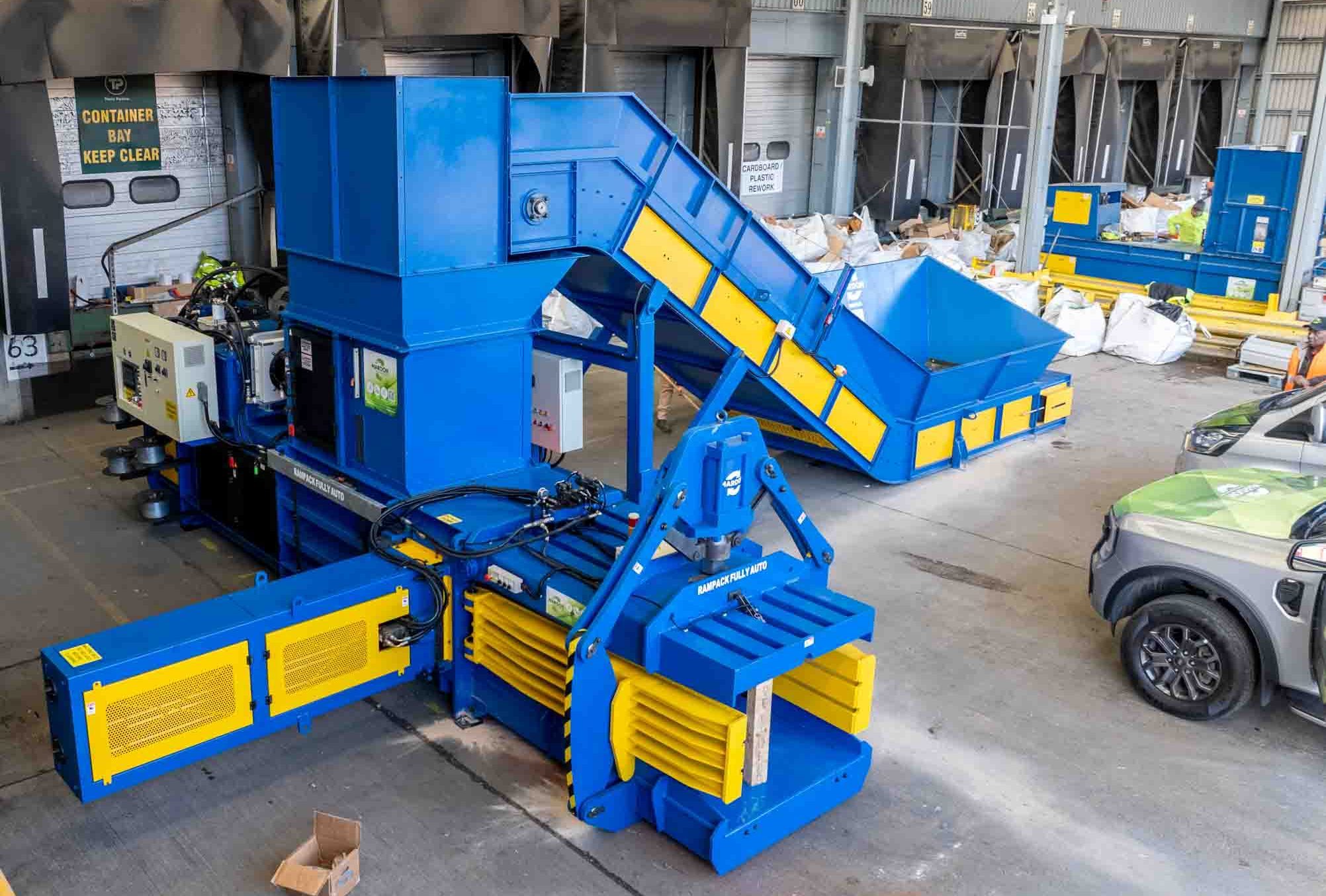
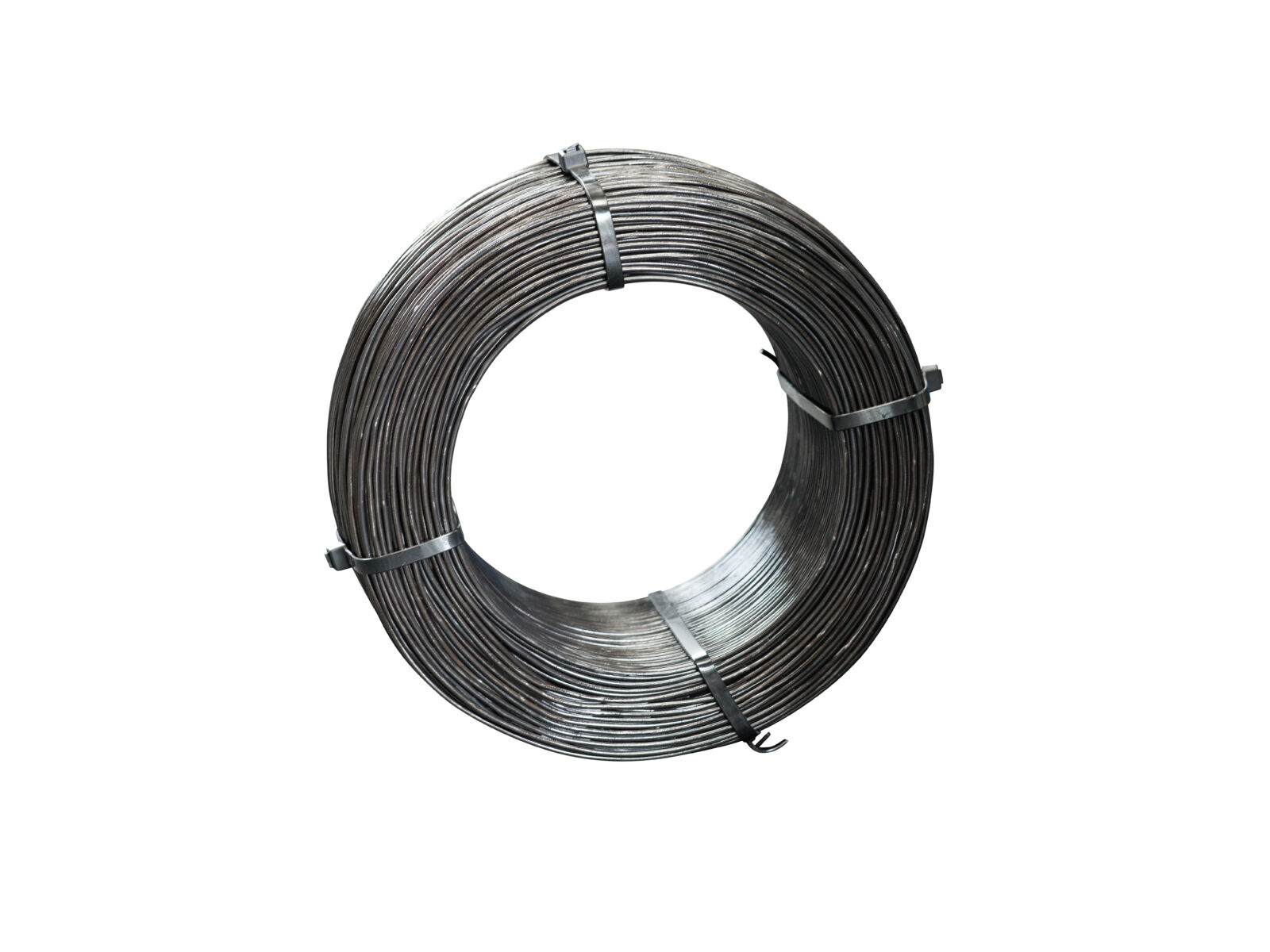
Coiled wire, by contrast, is fed continuously from a large reel sitting on a wire former. It’s built for fully automatic balers, where the machine threads and ties every bale itself with no operator involvement. Our Twin Ram Baler range, for example, uses the Accent Wire tie system to guarantee a secure tie automatically, and that system depends on a continuous, unbroken feed of wire rather than pre-cut lengths.
Put simply: if your baler ties itself, you need coiled wire on a former. If a person threads and ties the bale, you need cut and loop.
You may also see quick link wire in our shop. It’s built for foam, tyres, and other highly compressible materials that need an instant snap-tie rather than a twisted join, so it’s not the right choice for cardboard.

What Wrong Wire Actually Costs You
A snapped tie can result in some high inconvenience: a bale that bursts on the yard, on the lorry, or worse, mid-lift. That means lost material, a health and safety issue, and in some cases a rejected load if your recycler won’t take loose cardboard mixed in with baled stock.
On fully automatic systems, incompatible or poor-quality wire causes jams in the wire-tie mechanism itself, which means unplanned downtime on a machine that’s often running continuously to keep pace with high-volume waste streams. For a site processing tonnes of cardboard a week, even an hour of downtime on the baler backs up the whole operation.
Travis Perkins is a good example of what correct wire and equipment matching looks like at scale. Their national distribution centre manages around hundreds of tonnes of cardboard and plastic waste every month through a fully automatic horizontal baler with conveyor feeding, installed by Mardon along with ongoing servicing and operator training.
Choosing the Right Gauge and Finish
Once you know your wire type, the next decisions are thickness and finish, and both affect how well a bale holds.
Cut and loop wire is available in:
- 3mm x 4.2m
- 3mm x 4.5m
- 3mm x 4.75m
- 3mm x 5m
- 3.5mm x 5.5m (black annealed only)
3mm is the standard most sites run. The heavier 3.5mm option exists for denser bales or harder materials, where a thinner wire is more likely to bite through the bale under compression or during transport.
Coiled wire runs from 3.1mm to 3.8mm, supplied in 40-45kg coils or 1 tonne pallets, and is built specifically for continuous-feed fully automatic systems.
On finish, our standard is black annealed wire, which suits the vast majority of indoor warehouse and distribution centre environments. Galvanised is also available for cut and loop wire, and it’s worth considering if your bales are stored outside, handled in damp conditions, or exposed to moisture before collection, since it carries better corrosion resistance than black annealed.
Matching Wire to Your Machine
This is where most of the mistakes happen, and it’s rarely because someone chose badly. It’s because nobody told them there was a choice.
For:
Mill-size vertical balers – Cut and loop wire needed
Semi-automatic horizontal balers – Cut and loop wire needed
Fully automatic channel balers – Coiled wire + wire former needed
Fully automatic twin ram balers – Coiled wire + wire former needed
If you’re not sure which category your baler falls into, or you inherited a machine that wasn’t supplied by Mardon, our team can confirm compatibility over the phone. It’s a five minute conversation that saves a wasted delivery – get in touch on 0800 587 3028!
Common Mistakes That Cost You Bales
Ordering by price instead of spec
The cheapest wire on the market is rarely the right gauge for your machine’s tie mechanism. Tolerances vary by baler brand and model, and wire that’s fractionally under spec can slip or snap under tension.
Running standard 3mm on dense or hard-to-bale material
If you’re baling harder materials or pressing to maximum density, 3.5mm gives you a wider safety margin. Thinner wire under heavy compression is more likely to shear.
Mixing up wire type between machine categories
Coiled wire won’t work on a semi-automatic baler’s manual tie system, and cut and loop won’t run through a fully automatic wire-tie unit. This sounds obvious in writing, but it’s a genuinely common ordering error, especially on multi-site operations where different locations run different baler generations.
Ignoring finish for the storage environment
Black annealed wire left in a damp yard or exposed to the elements will corrode faster than galvanised. That corrosion weakens the tie long before the bale is due for collection.
Letting stock run low
Wire shortages lead to sites improvising, whether that’s stretching an order further than it should go or substituting an incompatible product. Neither ends well.
Not a Baler Supplied by Mardon? You’re Still Covered
A lot of the enquiries we get for wire come from sites running balers we didn’t originally supply – that’s fine. Cut and loop and coiled wire aren’t proprietary to Mardon equipment, and our team can help you identify the correct gauge, length, and finish for your existing machine, whatever badge is on the front of it.
If you’re already comfortable with your baler but tired of guessing on consumables, that’s exactly where we can help without needing to sell you a new machine.
Get the Right Wire, First Time
Whether you’re running a semi-automatic mill-size baler or a fully automatic system processing tonnes a week, the right wire is the difference between a clean, saleable bale and a costly mess on the yard.
If you’re unsure which type, gauge, or finish suits your machine, get in touch and we’ll confirm it before you order.