
Most sites don’t need the biggest baler available – they need the right one.
A vertical cardboard baler is the standard choice for businesses generating a steady, manageable flow of cardboard waste rather than a constant stream of it. But “vertical baler” covers a wide range, from a 40kg unit that fits in a stockroom to a mill-size machine producing up to 650kg bales for direct resale. Before you choose a model, it’s worth being honest about what your site actually needs, because the wrong choice in either direction either wastes money or creates a bottleneck.
This guide is built as a qualification check – work out where your site sits, and you’ll know whether a vertical baler is the right call, and if so, which end of the range you’re looking at.
Who Is a Vertical Baler Actually Right For?
Vertical balers suit sites with small to medium volumes of cardboard waste that need to be managed regularly but don’t require round-the-clock processing. This could be for retail units, small distribution depots, warehouses, workshops, offices, schools, and light industrial sites.
The common thread isn’t the sector, more so the pattern of waste. If cardboard builds up steadily through the day or week and someone can reasonably load and tie off a bale as part of their existing duties, a vertical baler fits. If cardboard arrives in a continuous, high-volume stream that needs processing without a person standing over it, you’re looking at a different category of machine, which we’ll come back to.
Space Requirements
This is usually the first filter, and often the deciding one. Vertical balers have a genuinely small footprint compared to horizontal machines, which is why they’re the default choice for sites where floor space is the constraint rather than budget.
Within the range, footprint scales roughly with output:
- Mini vertical balers are built for locations where space is tightest, think stockrooms, back-of-house retail, small workshops. They run on single phase power, so there’s no need for a costly electrical upgrade.
- Mid-range vertical balers need slightly more room but still fit sites with restricted floor space or low ceiling heights. Also single phase.
- Mill-size vertical balers need more clearance and run on three phase power, so it’s worth checking what your site has available before you get attached to a model.
If you’re not sure what your ceiling height, doorway clearance, or power supply allows, that’s exactly what a free site survey is for. Talking it through with the team stops you going for a machine your site physically can’t accommodate.
Bale Weight: Matching Output to Volume
Bale weight tells you two things: how much waste the machine handles, and how much value you can recover from it.
Loose cardboard costs money to store and collect. Baled cardboard, especially at higher weights, can often be sold on for rebate instead.
Across the vertical range:
- Mini models produce bale weights from roughly 40 to 150kg, suited to smaller, steadier volumes.
- Mid-range models step up to 250 to 300kg, a practical middle ground for sites generating enough cardboard to justify a larger machine but not enough to need mill-size output.
- Mill-size vertical balers produce bales from 450 to 650kg, dense enough to sell directly to recycling mills without needing to combine or rebale.
- Multi-chamber models run from 40 to 200kg but let you bale more than one material stream at once, which is worth knowing if cardboard isn’t your only recyclable.
The honest way to work out where you sit is to look at your current waste volume, not your aspiration for it. Undersizing means you outgrow the machine within a year. Oversizing means paying for capacity, power, and floor space you’ll never use.
Labour Input: The Part Most Sites Underestimate
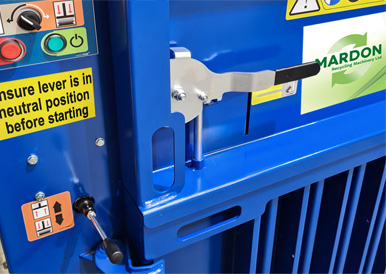
Here’s the detail that gets missed in most comparisons. Every vertical baler, from the smallest mini model to the largest mill size unit, gives the operator hands on control throughout the process. From loading the material and running the compaction cycle, to threading and tying the wire once the bale is ready, and ejecting it, the operator stays in full control of every bale produced.
That’s not a downside, it’s simply what the category is. Vertical balers are designed for sites where a person is already nearby to handle the cardboard, and baling becomes part of that routine rather than a dedicated job. For small to mid-volume sites, this is usually the more cost-effective way to operate, since you’re not paying for automation you don’t need.
Where it becomes a genuine cost is at higher volumes. If someone is spending a meaningful chunk of their working day loading and tying bales, that’s a labour cost worth putting a number on, especially across multiple sites or shifts.
Find your ideal vertical baler today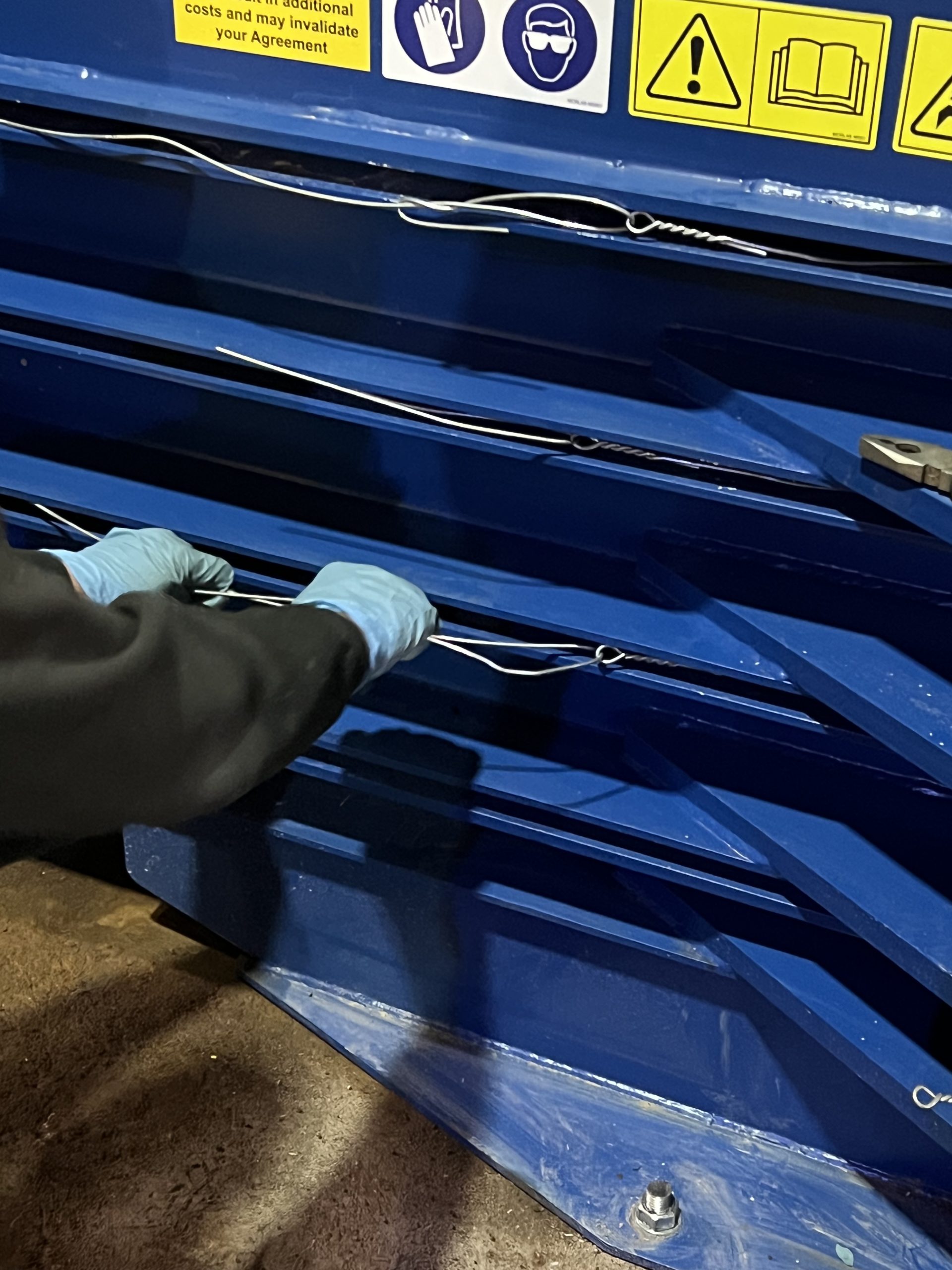


When You’ve Outgrown Vertical
A few signs point toward moving up to a horizontal baler instead:
- Cardboard volume has grown to the point where an operator is tied to the baler for a significant part of the day
- Your site runs a continuous or near-continuous stream of cardboard rather than a steady trickle
- You’re looking to remove manual loading and tying from the process entirely, not just make it faster
- You’re feeding the baler via conveyor and want it to run without someone monitoring it.
Horizontal balers split into semi-automatic, where the machine alerts an operator once a bale is ready to tie and eject, and fully-automatic, where it bales, ties, and ejects without any operator input at all. We’ve written a fuller breakdown of vertical versus horizontal mill-size balers if you want to go deeper on that comparison.
To put a real number on what automation can recover, one of our customers running a fully-automatic baler with conveyor feed had outgrown their original sorting and loading setup as volumes increased. After we redesigned the conveyor and loading system around their site, they saw throughput increase by 2 tonnes per hour and saved 20 man hours in labour per day, alongside a measurable improvement in bale quality. You can read the full conveyor feed system case study here.
A Quick Way to Check Yourself
Vertical is likely right for you if:
Cardboard builds up steadily rather than continuously. An existing team member can reasonably fit baling into their day. Floor space or ceiling height is limited. You want lower upfront cost and simpler running requirements.
Horizontal is worth exploring if:
Cardboard arrives in high, constant volumes. You’re feeding via conveyor or bulk loading. Labour cost on baling is becoming significant. You want the process to run with minimal or no operator input.
If you land somewhere in between, that’s normal, and it’s exactly what a site survey resolves.
Keeping Your Vertical Baler Running Well
Once you’ve got the right machine, the wire and consumables you run matter more than most sites expect. Mill-size and heavy-duty vertical balers use cut and loop wire, and getting the gauge and finish wrong is one of the most common causes of loose bales and unnecessary downtime. We’ve covered that in detail in our guide to cardboard baler wire if you want to get that part right from day one.
Find the Right Fit, Not Just a Baler
A vertical cardboard baler is the right call for a huge range of sites, but only when it’s matched properly to your space, your volume, and how much operator time you’re willing to put into it. Get that match right and it’ll run cleanly for years. Get it wrong and you’ll be having this conversation again within twelve months.
If you’re still weighing it up, our team can talk you through it properly, no pressure, no oversell.


